
Planning a mixed container: by cartons, not by models
The hard part of a mixed container is not fitting everything in, it is filling it. When carton heights differ by 20–30 mm the last row either leaves a gap or has to be broken open and repacked, and both cost money. Do it by carton count first, then stack by carton height: similar heights on one layer, the short ones on top levelled with slip sheets. Photograph by layer rather than by model at inspection — that is what proves the loading state.
Get a QuoteKey parameters
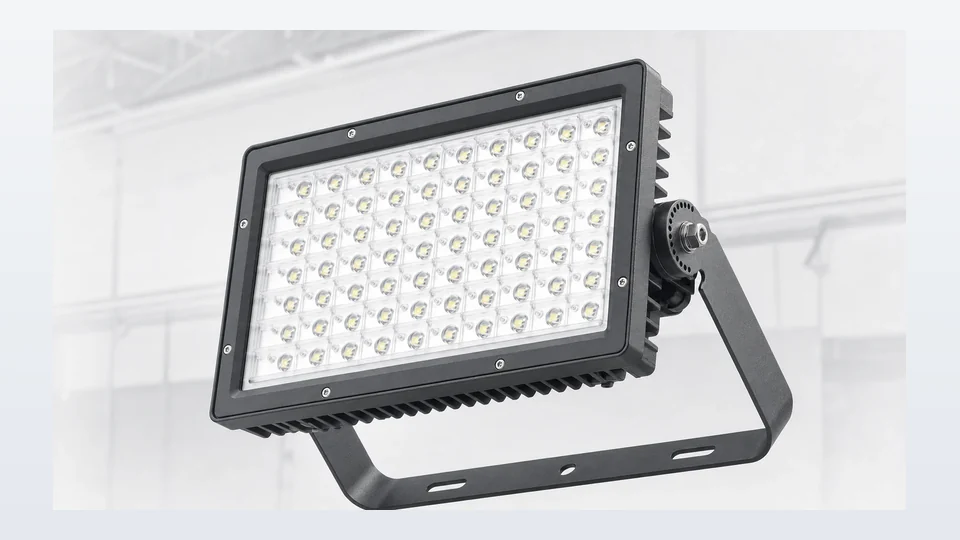
| Power | 100–200 W |
|---|---|
| Luminous flux | 12,000–25,000 lm |
| IP rating | IP66 |
| Indicative HS code | 9405 (lamps and lighting fittings) |
| MOQ | from 200 pcs per model |
| Packing | 1 pc per carton, 0.028 m³ per carton |
| Container type | 20GP / 40HQ |
| Loading quantity | planned by carton count and layer height, not by model count |
Classification, MOQ, packing: three items
The items that cause trouble in export paperwork are not the invoice but the classification and the packing. This page gives the product-side parameters and an indicative code; the final classification, duty rate and required documents are confirmed by the customs broker and the destination customs. Our part is having the description, materials, use and photometric data ready so the questions stop bouncing back.
Packing works the same way: neutral and branded differ in the shipping mark, the manual and the label, and changing one means stopping the line. If the order may become private label later, say so when ordering — after production the cost is a rebuild, not an adjustment.
How MOQ and mixed loading actually work
MOQ is not a capacity limit but a changeover cost: every changeover re-sets the printing, the machine program and the first-article check. So adding volume to one model is far cheaper than spreading small quantities across models — quoting a full year of demand at once usually beats squeezing a single order.
Packing: 1 pc per carton, 0.028 m³ per carton. Mixed containers work, but plan by carton count rather than by SKU count — fix the cartons and volume per model first, then lay out the container. When carton sizes differ the last row often goes out partly empty, and that loss usually costs more than ordering a little extra.
Four things to verify before ordering
① Whether flux and efficacy are quoted for the complete fixture or the light source — a 10–15% difference that changes the fixture count. ② Whether colour temperature and CRI are measured or nominal values; mixed CCT within one batch is the most common arrival dispute. ③ Driver brand and model, plus its derating curve at high temperature — it is the only part that really sets life. ④ The mounting kit list: chain, bracket and anchors in the box, or the site stops for a day.
Concepts on this page
Need a Lighting Plan?
Tell us your scenario, Jie Zhai will help you choose.
Get a Quote All specification pages